

Forest School

Meadowside is lucky to have a Forest School provision led by our Forest School Teacher Miss Brown.
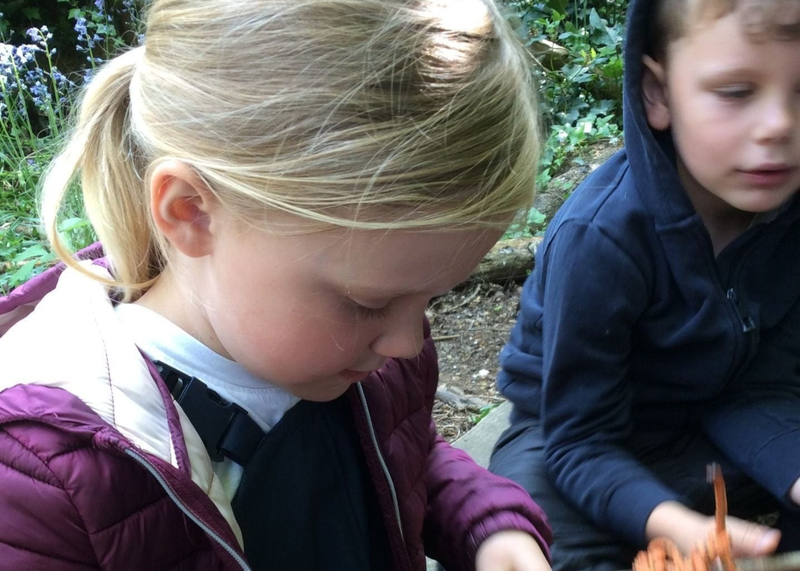

We have ended this year with a whittling project which has been a test of children’s resilience and patience as they have learned that sometimes great craftsmanship takes time. We whittled tiny wooden mushroom shapes , developing skills in a new cutting skill each week including sweep cuts, stop cuts, sawing and sanding. The children furthered their strength and dexterity using their hands.
When they were complete the children chose how to decorate them and added screw hooks and key chains to make keyrings to keep to remind them of the amazing skills they have developed across the years at Forest school sessions at Meadowside.
We cooked chocolate cakes in oranges over our camp fires and enjoyed marshmallows and hot chocolate treats!
There was time to develop creativity and independent skills too, with exploring the embankment and developing dens in groups of their own devising.
An awesome Year 6 cohort- Well Done!!!
Please take a look at our historical school blog, it shows what each class over the years accomplished throughout their sessions.
Introduction to Forest School at Meadowside.
At Meadowside, we have a well-established Forest School programme, Forest School is delivered by a trained teacher and every child in school has the opportunity to partake every year.
Our Forest School is an inspirational programme that offers our children regular opportunities to appreciate and enjoy their local woodlands. We aim to nurture an understanding and deep respect for natural places. Children have an opportunity to experience nature at first hand. The Forest School ethos is holistic and aims to promote students’ confidence, social skills, sense of self-worth and emotional well-being in an outdoors environment, this complements our school values of nurturing curiosity, kindness and courage.
Children are taught bushcraft skills and are also encouraged to find things out for themselves through self directed learning and play, for example games, stories, creative expression and sharing rules and inventions. Forest School activities might include den building, cutting firewood and fire building, crafts such as dream catchers or whistles, games, rope swings, flora and fauna identification, as well as stories and singing. These activities often complement teaching in the curriculum, but also serve as an enrichment to our children’s depth and breadth of knowledge and skills. Our Forest school sessions run in all weathers, we want our children to learn about seasons, about how to dress themselves to keep comfortable and dry. Our children understand that the fun doesn’t stop when the rain starts, we stay outside and carry on.
What does a Forest School session look like?
The children will be dressed appropriately for the weather and the woods. The children will explore their way down the field or along our old railway embankment, noticing seasonal changes and being mindful of the outdoor setting.
We will talk through the rules of Forest school, and remember the behaviours that the children will engage in to choose to be safe.
The children may play games to familiarise themselves with the outdoor setting.
Guided by the teacher the group will learn some skills based on bushcraft, or linked to the wider curriculum or Big Idea they are working on, and will then have the opportunity to put these in context, or build on them in weeks that follow.
The children will have time to explore, learn and play, or to work on skills they have developed in the skills sessions but independently direct the outcome of them.
There will be a fire where we reflect on learning, or sing, or hear a story, or just enjoy campfire chatter while we have a snack and hot chocolate.
We are always grateful for help from other adults, if you would like to get involved, or come and join in with a session, please get in touch k.brown@meadowsideacademy.org
Forest school at Home!
You don’t need any special equipment or knowledge to develop your children’s understanding, satisfy their curiosity and develop their love of the outdoors.
Many of these sites offer simple ideas, using resources that you may have around the house, that your children may use as a starting point to develop their own questions, ideas, projects and activities.
Always follow the government’s advice regarding being outdoors, but if it’s possible in your circumstances use a windowbox/ yard/ garden/ open windows to allow children some activity in the fresh air. Activities that can’t be done outside can sometimes be adapted for inside and if the worse comes to the worse and you have to, there are plenty of inspiring activities and educational resources here that you can use indoors too.
Outdoor resources (child and teacher friendly)
John Muir trust https://www.johnmuirtrust.org/john-muir-award/
https://www.ltl.org.uk/free-resources/ Brilliant resources with learning ideas across all ages and subject areas (the resources in the leaflets I sent home are just a few from this fantastic site)
The Woodland Trust https://www.woodlandtrust.org.uk http://www.naturedetectives.org.uk/packs
The National trust https://www.nationaltrust.org.uk
Outdoor inspired ideas- 50 things to do before you are 11 ¾ https://www.nationaltrust.org.uk/50-things-to-do
Child friendly app with plenty of great learning ideas and starting points https://www.missionexplore.net/
This is a great way to get children outside walking and exploring, a worldwide treasure hunt! https://www.geocaching.com/play
Reception class started their Forest school journey in September and have had regular time in the woods with the wonderful Reception staff all year round. This means that by the time they have their ‘official sessions’ they are getting dressed by themselves and have already learnt how we show off our school rules in the outdoor setting.
We started with knotwork, learning how to tie and overhand knot in lots of different ways, on the floor, in the air, doubling it up, and then leading into using it to thread through eyelets and enhance den building and for games. We built human sized dens but also dens for our woodland toys, creating shelter fro them near to food sources and natural habitats.
We have spotted lots of leaves in the woods and begun to identify and differentiate stinging nettles and brambles and even spot Arum maculatum leaves and berries. The plant fairies visited and left fairy dust around, helping us with this!
The children have had a go at peeling sticks using kitchen peelers with gloves to develop safety habits that we will need them to have when they are working with whittling tools in Y6!
And it wouldn’t be forest school if we hadn’t had a toasted marshmallow to celebrate all our hard work!